Project address
Provide the receiving facility address, delivery constraints and the legal entity that will issue the RFQ. The assigned project office and contractual address are returned in formal correspondence.
Start with the operating facts that decide whether autonomous forklift transport is practical: load unit, route geometry, traffic interactions, required rate and controls ownership. Project contact details are confirmed in the issued correspondence so procurement teams can verify the responsible entity before sharing controlled documents.
Provide the receiving facility address, delivery constraints and the legal entity that will issue the RFQ. The assigned project office and contractual address are returned in formal correspondence.
Use the secure form below to request the correct sales or technical contact. Direct telephone and email details are supplied with the response, avoiding unverified routing information.
State your time zone, preferred response window and any shutdown period. No fixed response time is stated until scope, region and responsible team are confirmed.
A route sketch is more valuable than a general automation brief. Mark pickup and drop positions, aisle clearances, intersections, doors, gradients, floor transitions and restricted areas. Add representative load dimensions and mass, including overhang and unstable packaging conditions.
For an integration discussion, identify the task source and the system expected to own queuing, dispatch, cancellation and recovery. If a WMS, WCS, WES or PLC interface already exists, list available message documentation and test environments. BALYO SAP WMS integration questions should include the actual SAP landscape and middleware boundary; a product name alone does not define an interface.
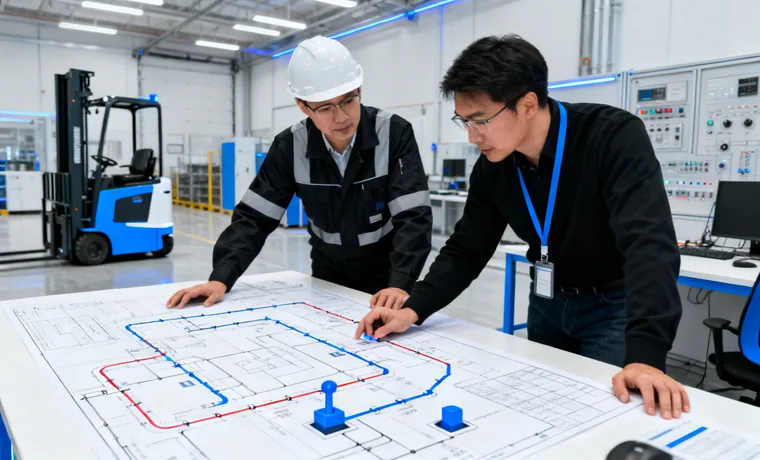
Describe one movement loop in enough detail to expose the constraints. A useful initial submission normally includes:
All figures remain project inputs until checked against drawings, observed conditions and the proposed equipment configuration. A form submission is an inquiry, not a quotation, performance commitment or order acceptance.