Flow definition
Observe loads, routes, calls, dwell, congestion, replenishment and peak windows. Separate measured data from design assumptions.
Translate warehouse movement into a controlled fleet scope: observable route conditions, explicit WMS/WCS ownership, representative acceptance cases and a release plan that protects live operation.
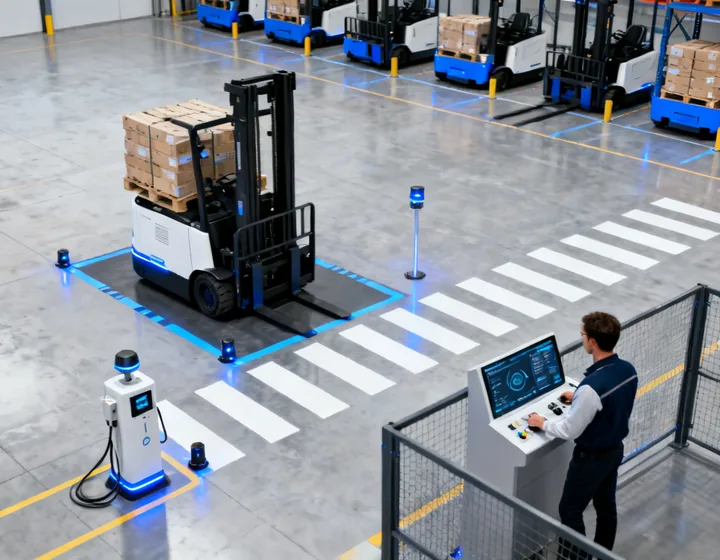
Service scope is defined by project documents. The packages below organize questions; they do not imply a fixed deliverable or response commitment.
Observe loads, routes, calls, dwell, congestion, replenishment and peak windows. Separate measured data from design assumptions.
Assign WMS, WCS, WES, PLC and fleet-management handshakes, alarms, timeouts and recovery authority.
Map scanners, crossings, restricted zones, manual traffic, abnormal states and authorized restart steps.
Define FAT exclusions, SAT conditions, training, staged cutover, fallback routes and issue closure.
These are repeatable validation patterns rather than client result claims. Actual test loads, rates and acceptance thresholds belong in the approved project protocol.
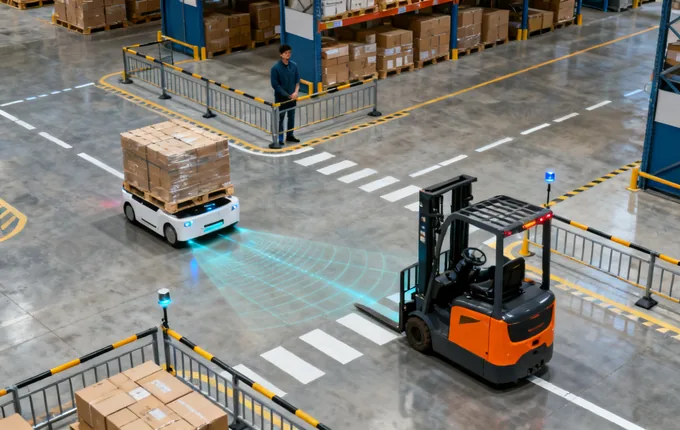
Background: a robot route intersects manual vehicle and pedestrian movement. Method: stage permitted, blocked and sensor-disagreement conditions while logging detection, stop, queue and authorized restart states. Evidence: time-stamped state history, observer record and closed exceptions. This verifies behavior under agreed conditions without presenting an unsupported universal response time.
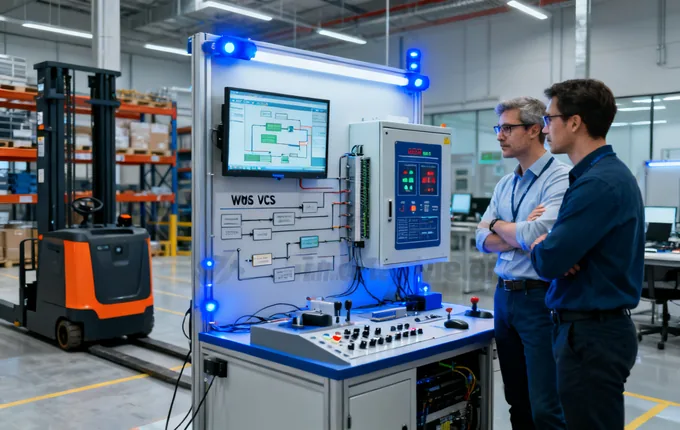
Background: transport work is issued through an upstream warehouse system. Method: exercise delayed acknowledgements, duplicate task messages, lost connectivity and restored communication at the agreed interface boundary. Evidence: message trace, fleet state, load disposition and recovery ownership. FAT may cover emulated messages; SAT must confirm site systems and operating roles.
Include the load unit, clearances, movement frequency, shared-traffic rule, calling system and exception that most affects the project decision. The response may request further measurements before equipment or schedule is discussed.